
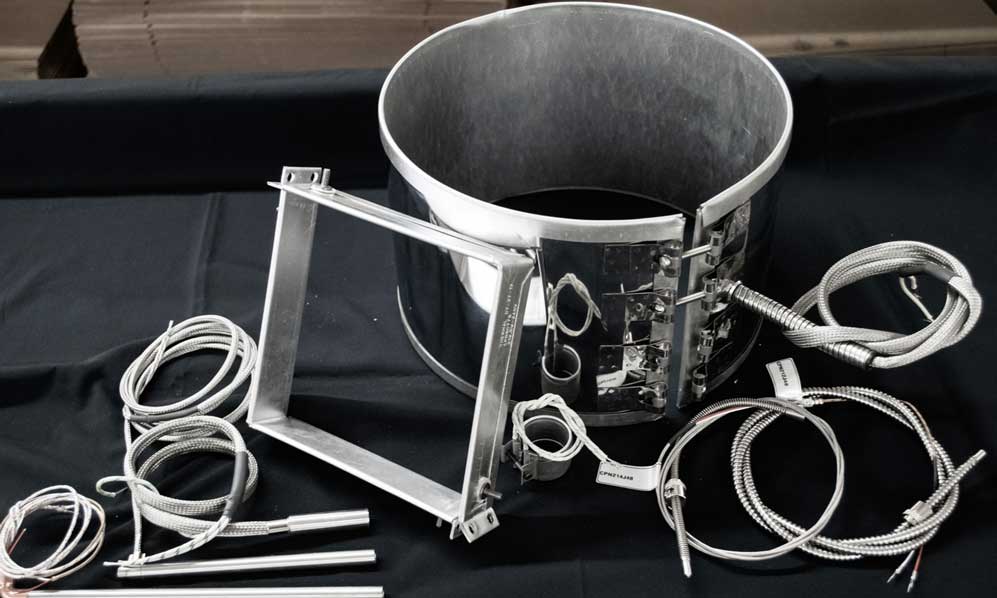

Anyone who works with extrusion or injection molding knows that keeping plastic melt stable isn’t just important—it determines quality, efficiency, and cost. A steady melt flow depends on more than the machine itself. Heating elements like the mica nozzle heater play a big part in making sure polymers behave consistently under pressure and at high temperatures.
Stable Barrel Heating That Keeps Melt Viscosity Under Control
Inside a molding machine, the melt barrel is where raw material transforms into a workable flow. A mica nozzle heater contributes to stable barrel heating by spreading warmth evenly across the length of the barrel, keeping the plastic at the right viscosity. If the barrel temperature dips or spikes, viscosity changes, and the entire melt flow loses consistency, leading to defects or wasted runs.
These heaters prevent those swings by holding tight control over the heating zone. A properly fitted mica nozzle heater ensures the polymer maintains a steady viscosity, which means the molten plastic moves with predictable pressure. This keeps cycle times regular and prevents uneven part surfaces. Operators can rely on consistent flow characteristics, which directly impacts both product appearance and performance.
Heat Uniformity Around the Nozzle Surface That Prevents Flow Disruptions
The nozzle is the final checkpoint before the melt enters the mold cavity. Heat uniformity at this stage is non-negotiable. A mica nozzle heater provides tight wrapping and even distribution, keeping the nozzle surface at a balanced temperature. Without this uniformity, hot spots and cool patches form, causing blockages, stringing, or flow hesitation.
Even minor temperature imbalances can ruin delicate mold designs. By using a heater that wraps closely around the nozzle, manufacturers reduce interruptions in flow. The result is cleaner fills, fewer rejects, and a smoother finish on molded parts. This consistency also improves long-term efficiency, as operators spend less time adjusting machines and more time producing usable product.
Why Rapid Thermal Recovery Supports Steady Extrusion Cycles
Extrusion lines move quickly, and every time the machine cycles, thermal balance can be disrupted. Mica nozzle heaters are built for fast thermal recovery, which means they rebound quickly after heat loss. This responsiveness ensures that the polymer inside the nozzle doesn’t cool too much between cycles.
The benefit of rapid thermal recovery shows in extrusion consistency. Materials with narrow processing windows, like specialty polymers, rely on heat stability to maintain uniform properties. A mica nozzle heater helps these cycles run smoothly, avoiding downtime caused by temperature lag. For operators, it also means fewer interruptions to reset or purge material that has cooled unevenly.
Close Contact Fit That Minimizes Temperature Fluctuations During Runs
The physical fit of a heater is just as important as its wattage or design. Mica nozzle heaters are designed to form a snug fit around the nozzle surface, ensuring heat transfers directly where it’s needed. Loose fits or gaps create air pockets, and air is a poor conductor of heat, leading to inefficient heating.
A tight-contact heater minimizes fluctuations by eliminating those gaps. It allows precise conduction, reducing wasted energy and delivering steady heat across the run. This not only supports consistent melt flow but also extends heater life by preventing uneven stress on the element. For long production runs, the benefits are clear—less temperature drift and more reliable output.
Controlled Watt Density That Balances Melt Temperature Stability
Watt density refers to how much power is applied across the heater’s surface area. A mica nozzle heater offers carefully controlled watt density, which means it avoids overheating small sections of the nozzle. Balanced watt density prevents localized overheating that can degrade plastic, discolor products, or damage molds.
For operators, this balance means stable melt temperatures throughout the production process. By keeping heat input controlled, the heater maintains melt fluidity without scorching material. This consistency supports higher quality output and reduces scrap rates, making controlled watt density a key factor in achieving smooth melt flow.
Resistance to Cold Spots That Could Interrupt Material Flow
Cold spots are a frequent issue in molding and extrusion, often appearing where heat transfer is uneven. A mica nozzle heater reduces the risk of cold spots by maintaining contact across the nozzle’s full surface. Without cold spots, the material flow remains uninterrupted, reducing pressure inconsistencies and avoiding partial fills.
Over time, eliminating cold spots also protects machinery. Pressure surges caused by uneven flow can wear down equipment faster. By resisting cold spot formation, mica heaters not only stabilize melt flow but also extend the life of molding machines. This dual benefit improves both quality control and long-term operational efficiency.
How Consistent Sheath Temperatures Promote Smooth Polymer Delivery
The sheath of a mica nozzle heater encloses the heating element, and its temperature consistency is critical. If the sheath fluctuates, the nozzle temperature follows, and melt flow becomes erratic. A consistent sheath temperature ensures the polymer is delivered smoothly into the mold cavity with no hesitation or surging.
This consistency directly impacts part precision. Complex molds with fine channels require steady delivery to avoid short shots or flash. A mica nozzle heater ensures the melt maintains stable flow characteristics from barrel to mold, making it a trusted solution in applications where precision matters most.
Thermal Endurance That Maintains Melt Flow over Extended Production Hours
Extended runs test the durability of heating systems. Mica nozzle heaters are built with thermal endurance in mind, holding steady temperatures across long production hours without performance drop. This endurance ensures that melt flow remains constant even after shifts of continuous operation.
With strong thermal endurance, downtime for heater replacement or machine recalibration is reduced. Operators can count on uninterrupted production while maintaining quality output. The ability of a mica nozzle heater to sustain performance hour after hour makes it an essential part of reliable extrusion and molding systems.