

Travel is a strange teacher. Sometimes it whispers lessons through temple bells and salt-kissed winds, other times it hammers them home in icy winds that leave your lips numb. India, in its vastness, offers both extremes—journeys rooted in faith and history in the south, and raw encounters with nature’s harshest beauty in the north. Two places stand at these ends of the spectrum: Rameshwaram and Spiti. Different as day and night, but equally capable of leaving you changed.
The Timeless Pull of Rameshwaram
There’s something magnetic about Rameshwaram. Maybe it’s the stories—Rama building a bridge to Lanka, the whispers of myth that cling to every stone. Maybe it’s the geography—an island town hugged by the Bay of Bengal and the Indian Ocean, where the sea seems to stretch forever. Or maybe it’s simply the feeling of being in a place where devotion is as much a part of the air as the salt.
Many travelers discover the town through south india tour packages rameshwaram, which usually weave in the Ramanathaswamy Temple, known for its astonishing corridors and intricately carved pillars. Walking barefoot along those endless passageways, hearing chants rise and fall, you realize this isn’t just architecture—it’s an atmosphere. The temple’s 22 sacred wells, each with water of different taste and significance, add to the sense that Rameshwaram is less a destination and more a living ritual.
But the town isn’t all solemnity. Step outside, and you’ll find the Pamban Bridge stretching like a ribbon across the sea, trains crawling along it with a patience that makes you stop and stare. Sunsets here are their own prayer—soft light spilling across waters that never seem to end.
The Smaller Stories Along the Way
Beyond the big landmarks, Rameshwaram hides quieter moments. A fisherman mending his nets on the shore. Kids laughing as they chase each other along narrow lanes. Street-side vendors serving hot idlis with coconut chutney at dawn. These small details, often overlooked, make you realize that pilgrimages aren’t only about gods—they’re about people too, about life unfolding around devotion.
And if you’re willing to wander, you’ll find places like Dhanushkodi—the “ghost town” at the island’s tip, abandoned after a cyclone decades ago. Standing there, with winds whipping around you and ruins scattered against the sea, you can almost hear the echoes of what once was.
Shifting North: Spiti’s Winter Silence
Then there’s Spiti, almost the polar opposite. Where Rameshwaram feels warm, crowded with pilgrims and wrapped in myth, Spiti is stark, lonely, and unsparing. Especially in winter. The valley, tucked high in Himachal Pradesh, transforms into something otherworldly once the snow sets in. Villages disappear under white blankets, rivers freeze into glass, and silence becomes so loud it rings in your ears.
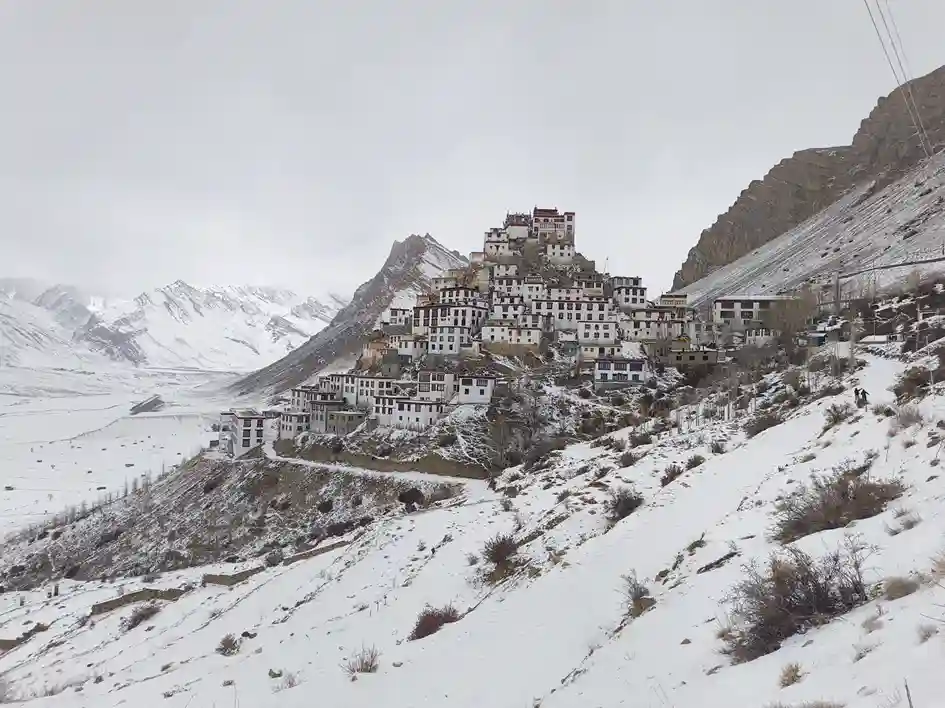
A journey to spiti in winter isn’t casual. Roads are treacherous, cold seeps through the thickest jackets, and oxygen thins as you climb higher. Yet, those who brave it speak of an experience like no other. Key Monastery, perched dramatically on a hilltop, looks like it belongs in a dream, its whitewashed walls blending into the snow around it. The frozen Spiti River glimmers like steel, while villages such as Kibber and Langza survive in a state of quiet resilience, their mud houses clinging stubbornly to the earth.
Traveling here in winter isn’t about sightseeing—it’s about surrender. To the weather, to the altitude, to the realization that life can exist even in conditions that feel impossible.
The Harsh Beauty of Survival
What strikes you most in Spiti isn’t just the landscape, but the people who call it home. Even in bone-cracking cold, villagers go about their routines, their laughter surprisingly warm against the icy backdrop. Meals are simple—barley bread, yak butter tea—but shared with generosity that makes the cold outside feel less biting.
There’s something humbling about it. While cities chase convenience, Spiti’s winters demand resilience. And in that demand lies its beauty—it teaches you to appreciate small comforts: the warmth of a fire, the taste of hot soup, the weight of a heavy blanket.
Two Journeys, Two Rhythms
Rameshwaram and Spiti couldn’t be more different. One is shaped by water and myth, the other by snow and silence. In Rameshwaram, the focus is outward—temples, rituals, bridges that connect the land to legends. In Spiti, the focus turns inward—you can’t help but confront yourself in the quiet of its frozen valleys.
Yet both journeys share something vital: they slow you down. They strip away the clutter of everyday life, whether through chants echoing in a temple corridor or the crunch of snow under your boots in an empty valley. They remind you that travel isn’t always about fun or leisure—it’s about perspective.
The Contrasts That Complete the Picture
Traveling from Rameshwaram to Spiti, even in imagination, is like flipping a coin between fire and ice. The humid air of the southern coast clings to your skin, while the northern winds of Spiti bite into it. The soundscapes are different too—temple bells and sea waves in one, howling winds and deep silence in the other.
But isn’t that the point? To experience both? To know what it feels like to be part of a crowd of pilgrims, sharing devotion with strangers, and also what it feels like to stand utterly alone in a valley where time seems frozen? Both teach you something, though the lessons are different in tone.
What You Carry Back
From Rameshwaram, you carry faith—not necessarily religious faith, but faith in continuity, in traditions that survive centuries, in the idea that places can hold stories bigger than ourselves. From Spiti, you carry humility—the kind that comes from standing small against mountains that don’t care about your timelines or troubles.
Together, they give you balance. Too much of one and you risk getting lost—either in rituals or in solitude. But together, they remind you of the full spectrum of travel, of life even: the warmth of community and the clarity of silence.
Closing Thoughts
Travel isn’t about choosing between places like Rameshwaram and Spiti. It’s about letting both shape you in their own ways. A temple corridor lit by oil lamps, and a snowbound village glowing faintly under the northern sky—they’re not competing stories, they’re complementary chapters.
And maybe that’s the joy of a country as varied as India. One day you can be standing barefoot in the sands of Rameshwaram, salt air on your face, and another day you can be wrapped in layers, trudging through Spiti’s frozen trails. Both are journeys worth taking, not just for the views, but for the ways they quietly change you.